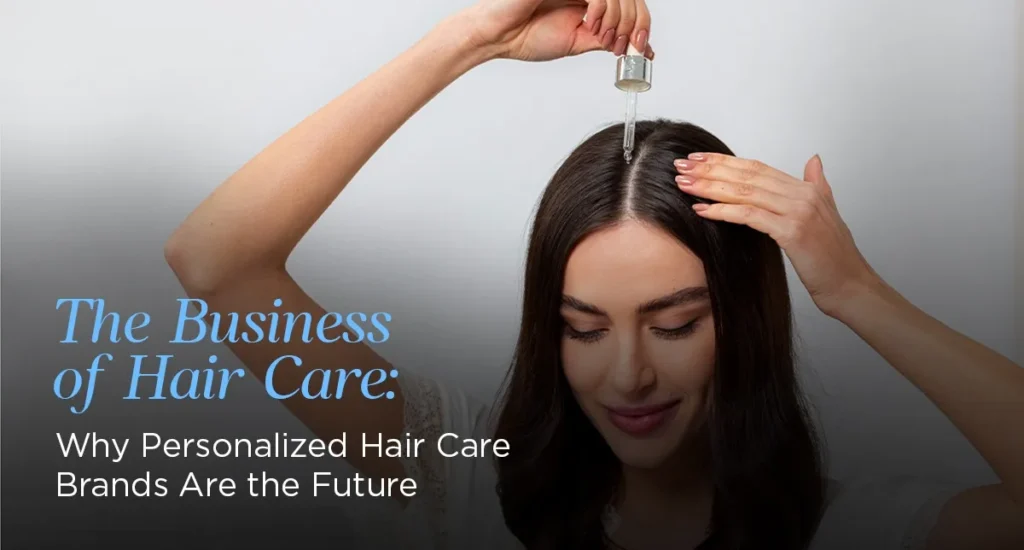
The global haircare industry is undergoing a transformation. Consumers are no longer satisfied with one-size-fits-all products; they seek personalized hair care solutions tailored to their unique hair types, concerns, and lifestyles. This demand is being driven by advancements in AI in haircare, scalp analysis technology, and the direct-to-consumer (DTC) hair brands model, making customization more accessible than ever.
The customized hair care market is set to flourish with a CAGR of 10.0% from 2024 to 2034. The market is put forth to hold a value of USD 4.01 billion in 2024, while it is anticipated to reach a valuation of USD 10.40 billion by 2034.
For beauty entrepreneurs and investors, this presents a lucrative opportunity. As consumer demand in haircare grows, brands that offer bespoke hair solutions can establish stronger customer loyalty, higher profitability, and a competitive edge in the market..
Consumption Trends in the Personalized Hair Care Market
The haircare industry trends indicate an increasing shift toward customized products designed to meet individual needs. Several factors are driving this growth:
Consumer Expectations: More people recognize that different hair types (curly, wavy, straight) and concerns (dryness, thinning, frizz) require targeted solutions.
Technology in Haircare: AI-driven scalp analysis technology enables precise recommendations based on hair and scalp conditions.
DTC Hair Brands Boom: With e-commerce and subscription models, brands can directly engage with consumers and fine-tune formulas based on feedback.
Sustainability Movement: Consumers seek sustainable hair care brands that minimize waste and use clean, biodegradable ingredients.
This shift is evident in brands like Prose, Function of Beauty, and Strands, which leverage AI-driven assessments and custom formulations to offer personalized shampoo and conditioner solutions.
Why is Personalized Hair Care a Lucrative Business Opportunity?
For entrepreneurs and investors, the rise of personalized hair care means a chance to build high-margin, scalable brands with strong consumer loyalty. Here’s why:
Higher Profit Margins — Consumers are willing to pay a premium for customized solutions that cater to their specific hair needs.
Recurring Revenue Models — Subscription-based services for personalized shampoo and conditioner ensure customer retention.
Data-Driven Business — AI and consumer insights allow continuous optimization of products and marketing strategies.
Eco-Friendly Differentiation — Sustainable haircare brands stand out in an industry where consumers increasingly prioritize green practices.
AI & Scalp Analysis Technology: The Future of Hair Care Innovation
Advancements in AI in haircare and scalp analysis technology are revolutionizing the industry by providing hyper-personalized recommendations. Here’s how:
AI-Powered Diagnostics: Brands like Hair Lab use microscopic scalp analysis to assess hair porosity, density, and scalp health.
Smart Apps & Quizzes: AI-driven tools like Function of Beauty’s hair quiz gather data to create tailored formulas.
Customized Ingredient Blends: Consumers receive made-to-order formulations enriched with active ingredients suited to their needs.
By integrating AI, businesses can provide bespoke hair solutions that outperform traditional off-the-shelf products, building stronger brand trust and loyalty.
The Role of Sustainability in Personalized Hair Care
The modern consumer is not just looking for effectiveness but also sustainability. Brands that incorporate eco-friendly practices have a competitive advantage:
Eco-Friendly Packaging — Biodegradable, refillable, or minimal-waste packaging appeals to conscious consumers.
Clean Ingredients — Natural, non-toxic formulations free from sulfates, parabens, and silicones are in high demand.
Reduced Overproduction — Made-to-order products prevent excessive manufacturing waste, aligning with sustainable business models.
Companies like Prose and Nutrafol set sustainability benchmarks by using clean formulas, refillable packaging, and carbon-neutral shipping.
Investing in the Future: How Entrepreneurs Can Capitalize
For those looking to enter the personalized hair care market, here’s how to build a successful brand:
Leverage AI & Technology — Develop an intuitive online assessment tool to guide customers in choosing the right formulation.
Adopt a DTC Model — Build a strong e-commerce platform with subscription options to drive recurring revenue.
Prioritize Sustainability — Use eco-friendly packaging, clean ingredients, and ethical sourcing to attract conscious consumers.
Offer Scalp Analysis Services — Partner with salons or dermatologists to provide personalized consultations and product recommendations.
Conclusion: The Personalized Hair Care Revolution is Here
The future of hair care is customized, technology-driven, and sustainable. Entrepreneurs and investors who recognize this shift can position themselves at the forefront of a lucrative industry. With consumer demand for bespoke hair solutions skyrocketing, now is the time to build innovative, personalized, and eco-conscious haircare brands that stand out in a competitive market.
Ready to dive deeper into the future of personalized hair care? Connect with Dr. Apoorva Shah for an insightful session on industry trends, AI-driven innovations, and sustainable solutions that are shaping the next era of hair care.